
When examining diamond anatomy, one of the most important yet often misunderstood components is the pavilion. The pavilion forms the lower portion of a diamond, extending downward from the girdle to the culet, and its shape plays a crucial role in determining how the diamond performs optically. The specific term used to describe the curvature of this section is "pavilion depth" or sometimes referred to in terms of the "pavilion angle."
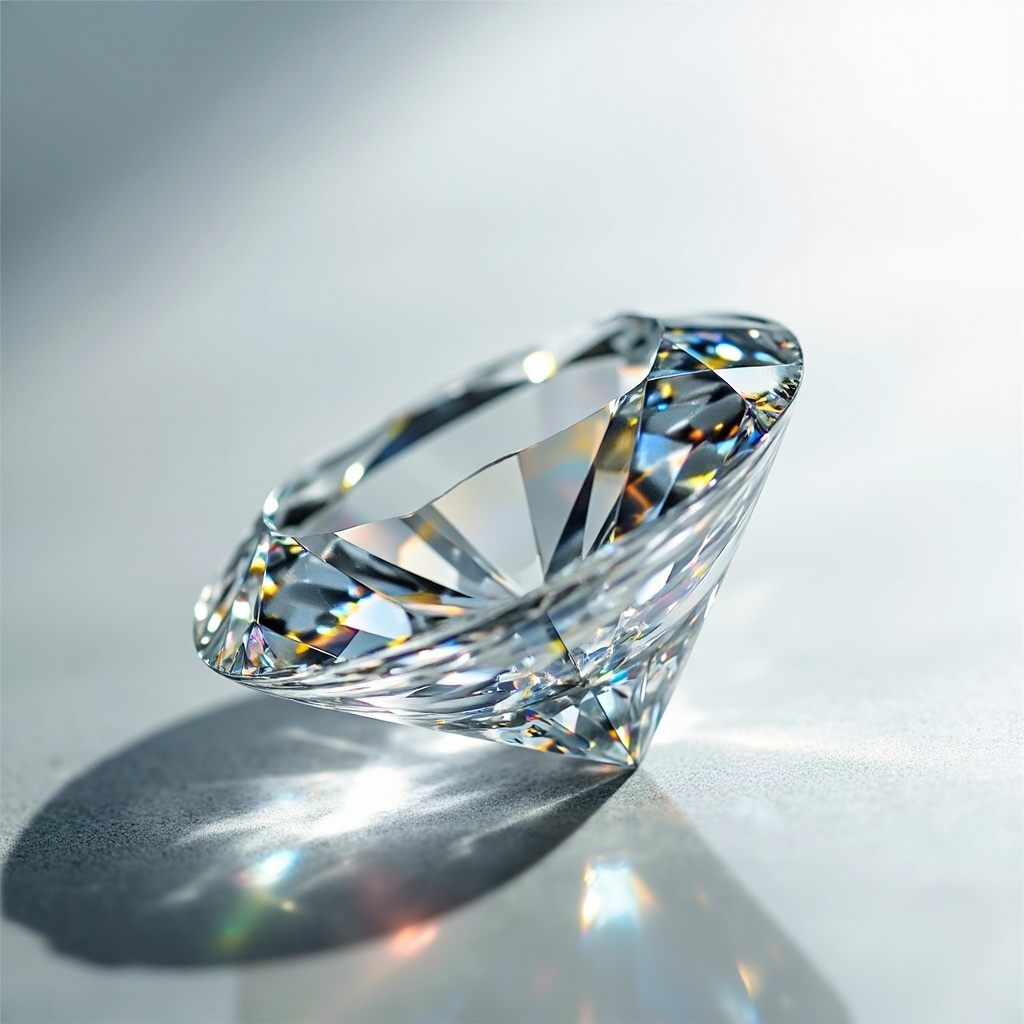
The pavilion depth measurement represents the vertical distance from the girdle to the culet, and it is typically expressed as a percentage relative to the total width of the diamond. This percentage is calculated by dividing the physical depth measurement by the width of the diamond, and it provides valuable information about how light will behave once it enters the stone. A properly proportioned pavilion allows light to enter the diamond and reflect internally, creating the brilliant sparkle that diamonds are famous for.
The curvature itself is measured in terms of the pavilion angle, which describes the slope of the pavilion facets from the girdle down to the culet. This angle is typically measured in degrees and is a critical factor in determining the diamond's ability to return light to the viewer's eye. The ideal pavilion angle for a round brilliant cut diamond generally falls within a specific range that maximizes light performance.
When the pavilion is too deep, light escapes through the sides of the diamond instead of reflecting back upward, resulting in a dark or "fish-eye" appearance. Conversely, when the pavilion is too shallow, light passes straight through the diamond without proper internal reflection, creating a glassy or lifeless look. Understanding the correct pavilion depth helps prevent these common cut quality issues.
The significance of pavilion depth extends beyond mere aesthetics. It directly impacts the diamond's brilliance, which refers to the white light reflections from the diamond's interior. It also affects the diamond's fire, which describes the colored light dispersion, and scintillation, which refers to the pattern of light and dark areas as the diamond moves. These three elements combined determine the overall visual appeal of the diamond.
Professional gemologists use specialized tools such as proportion gauges, ASET (Angular Spectrum Evaluation Theory) scopes, and computer-aided design software to accurately measure pavilion depth and angle. These instruments provide precise readings that help determine whether a diamond has been cut to optimal proportions. The data collected assists in grading the cut quality according to established standards.
In the context of diamond grading reports, the pavilion measurements are included alongside other critical dimensions such as table percentage, crown angle, and total depth. These combined measurements create a comprehensive profile of the diamond's cut quality. Consumers can use this information to compare different diamonds and make informed purchasing decisions.
The history of understanding pavilion depth dates back centuries to the early diamond cutters who discovered that certain proportions produced more brilliant stones than others. Modern diamond cutting has refined these proportions through mathematical calculations and optical science, resulting in the standardized cut grades used today. The knowledge of pavilion depth has been instrumental in achieving consistent quality across the diamond industry.
When shopping for diamonds, paying attention to pavilion depth can help buyers identify stones that offer the best balance between beauty and value. A diamond with an optimally cut pavilion will display superior light performance compared to a stone with poor proportions, even if both diamonds have similar color and clarity grades. This makes the pavilion depth one of the most important technical specifications to consider.
In summary, the term for the curvature of a diamond's pavilion is "pavilion depth" or "pavilion angle," and understanding this concept is fundamental to evaluating diamond quality. Whether you are a jeweler, a gemology student, or a consumer, knowing how pavilion depth affects light performance will help you appreciate and select diamonds with confidence.